As a grocery store owner you are constantly juggling inventory, customer demand, personnel issues and customer complaints. Inventory is a major factor in this balancing act. Managing inventory for a grocery store is a very complex task and the consequences of getting it wrong are very expensive. A stock out may be an inconvenience to a customer who drove to the store to buy something and overstocking results in rotting food and expired products. Manual inventory management is also a huge time sucker for employees who must spend time updating inventory records.
Retail grocery stores have a wide variety of inventory that must be managed and tracked accurately. Tracking inventory levels, making physical counts, taking inventory receipt information and manually ordering inventory is a major part of the job for most inventory personnel in retail grocery stores. But it doesn’t have to be. With grocery store inventory management software, all of the tedious tasks that monopolize your employees’ time can be automated. Your staff will be free to focus on more important tasks.
From Manual Counts to Automated Control
With modern inventory software, a great deal of routine and mundane work is handled automatically. For example, previous to having an inventory system, staff would have to count product levels in various locations, initiate new purchase orders for products that were running low, and then track down and fix any discrepancies. Now you can enjoy the benefits of having an always up-to-date inventory of products at your fingertips, with much less administration and work involved. The system works tirelessly behind the scenes to continually monitor and catch any discrepancies that develop, before they become a problem.
Reducing Employee Burnout Through Automation
Grocery work is hard work. Physically hard. Mindedly hard. In a world where a whole lot of things can be automated with a few keystrokes, the mundane, even menial tasks required to operate a grocery store are enough to drive a person mad. From having to count product items to manually enter product information, to chasing down discrepancies in the system to make sure inventory numbers add up, these never-ending tasks can easily overwhelm even the most patient person and are a prime contributor to turnover rates that gobble up profits from the cash registers of grocery store owners.
Automating the mundane streamlines processes, but it also drastically changes the way that work is done. With mundane tasks automated, teams are able to focus on far more impactful work — like serving customers, creating compelling experiences through visual merchandising, and handling one off issues. As a result, teams are happier in their role, less burnt out and less prone to leaving.
Smarter Replenishment, Less Waste
According to the USDA, grocery stores generate millions of tons of food waste annually, with roughly 30% to over 40% of fresh products often wasted due to overstocking, strict aesthetic standards, and supply chain issues. All of that lost revenue adds up quickly. With inventory management software, grocery stores can significantly reduce waste caused by inefficient inventory practices. Demand forecasting and automated purchasing orders help keep unnecessary inventory from building up and going to waste.

Our system makes use of your historical sales data at SKU level to recognize your buying behavior such as best selling products during weekends, holidays, special events or seasons. It identifies products that require earlier ordering to ensure timely restocking and optimizes the inventory levels of slow moving items. Our system utilizes this information to automatically purchase and deliver products in the right quantities at the right time.
Using this method in combination with First-In, First-Out (FIFO) inventory rotation is an excellent way to reduce waste while ensuring your customers always have access to fresh products. And your profits will grow.
Better Data, Better Decisions
Besides inventory tracking, inventory management software is invaluable to your business’ owners as it provides a wealth of data. Through reports, you can find the purchasing habits and trends of your customers, slow moving inventory, and receive early warnings of potential problems that may arise.
Predictive analytics helps you forecast demand and trends, so you can proactively plan your inventory, promotional and marketing activities. Combined with your regular scheduled data audits and validation processes, having historical predictive analytics information at your fingertips for every buying, planning and marketing decision provides you with unparalleled visibility into your operations and greater negotiating power with suppliers.
The Customer Experience Impact
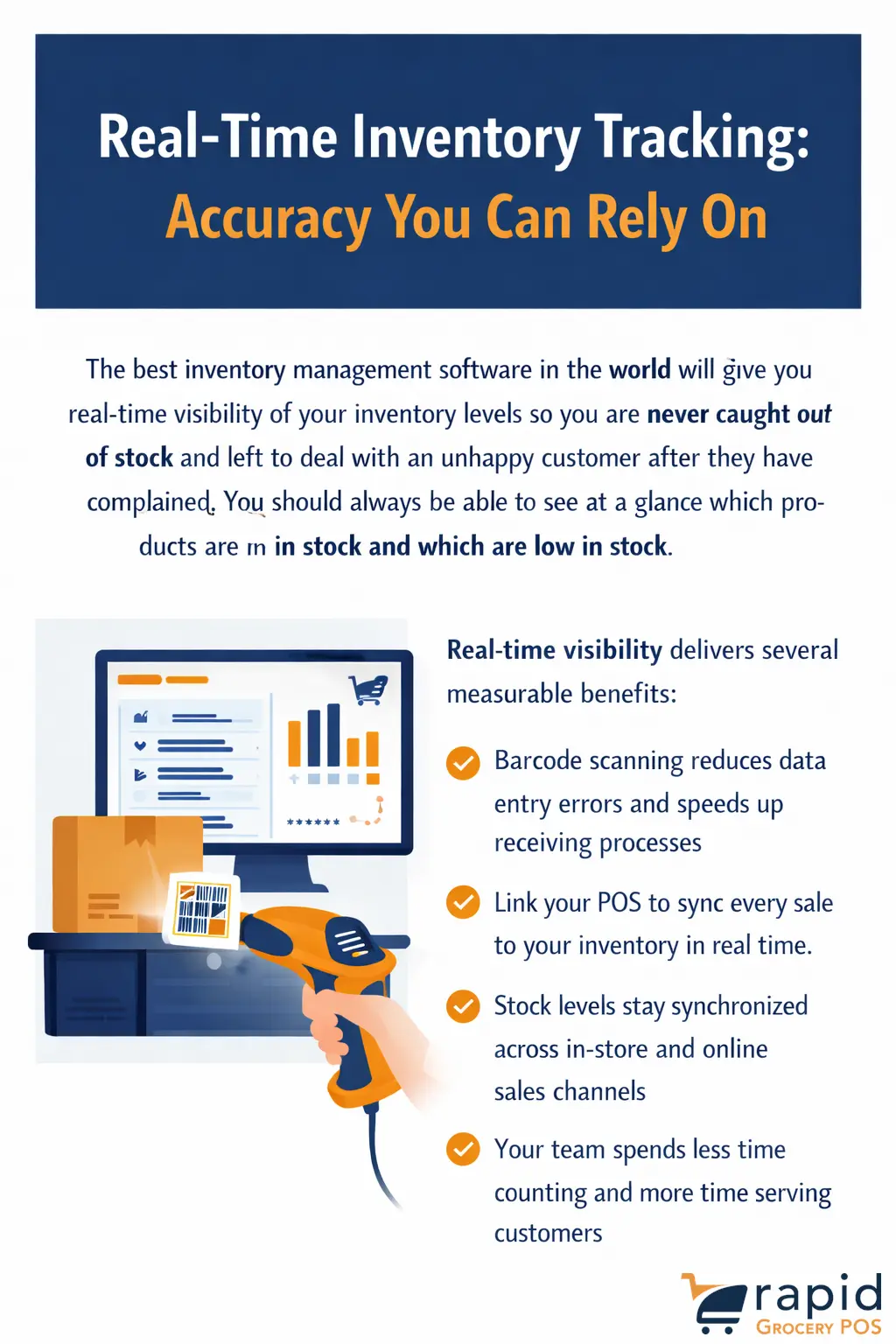
Making sure your stores have the right items in stock is crucial to customer satisfaction. Empty shelves are one of the quickest ways to lose a customer. When customers feel like they can always find what they need when they need it, they will continue to shop with you. When they can’t find what they’re looking for, they’ll go elsewhere and may never come back.
Are you stocking your best selling items, experiencing backorders and is it taking your staff an age to find product when customers come to the counter? Accurate inventory management helps to ensure that you have the right quantities of stock, to meet demand, prevent backorders and provides your staff with a quick and easy method for counting down stock. The end result is that customers receive their purchases more quickly, staff are able to deal with enquiries in a more timely fashion and customer satisfaction is improved.
You want customers to feel confident in your product offerings so they feel comfortable shopping at your store. And having an inventory management system in place to keep inventory levels and accuracy up-to-date across all channels will result in more sales on your website. Not only will customers buy more online when they know you have what they need when they need it, but they’ll buy more often as well. And all of these things add up to increased average order value – which is also a huge benefit to the customers you gain from having accurate inventory on your website.
A System That Grows With Your Store
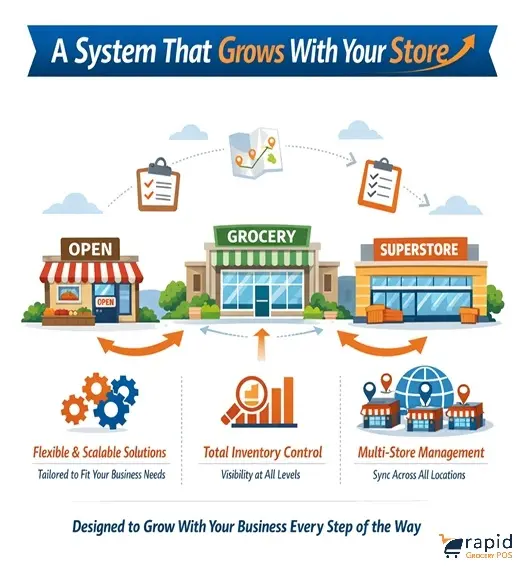
Every grocery store is unique. Whether you’re a small corner market or a large supermarket chain, you need an inventory system that is tailored to meet the specific needs of your store.
Inventory and order management systems are highly flexible and scalable. This means that your business can be supported in a way that is appropriate to your product range, ordering frequency and supplier arrangements. Your system can grow with your business, providing control and visibility at all levels. Multi-site retailers can view inventory levels across all stores, compare store performance and apply the same ordering processes in all locations, irrespective of their geographical separation.
Training Your Team for Success
The best way to get the greatest return on investment from your new tool is to train your staff. An educated staff is a more productive staff! If staff is left to ‘figure it out’ without any guidance on how to use the tool and how to interpret data, the potential for improved efficiency and effectiveness will not be realized to the same degree.
Onboarding should not be a painful experience. While we all know that the learning curve exists, it should not be long and the benefits derived from onboarding should not be years away. Most of our core systems and applications are designed with user experience in mind and have been equipped with various forms of training, onboarding tools and customer support to assist users in getting started.
What the Future Looks Like
Inventory management technology is evolving at a very rapid pace. As automation, artificial intelligence-powered demand forecasting, and supply chain visibility technologies continue to emerge, companies using inventory management technologies today will be well-positioned for the future. Those who do not adopt an inventory management system risk being left behind.
From real time inventory syncs on self-checkout to personalized marketing engines that know who your most valuable customers are, you shouldn’t be worried about the technology required to keep up with the expectations of today’s consumers. You should be worried about being the local, trusted grocery store that your community depends on.
Your staff will be able to accomplish so much more in less time and your customers will appreciate your greater availability and a better overall experience.
Frequently Asked Questions
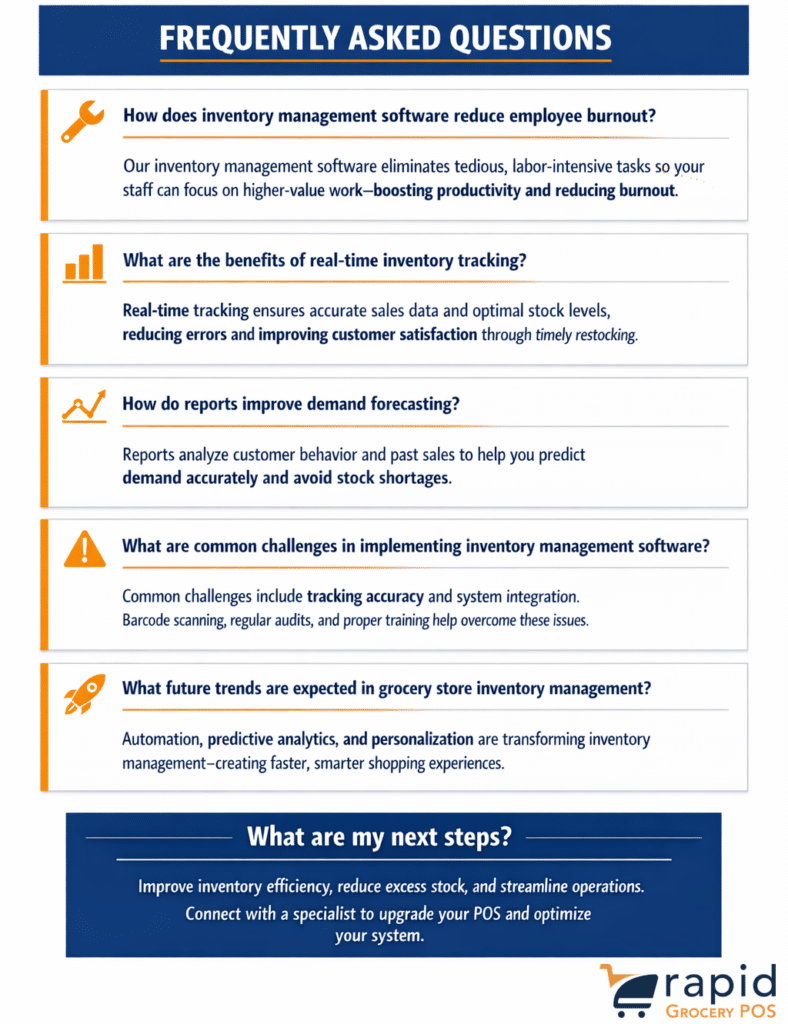
How does inventory management software reduce employee burnout?
Inventory management software reduces employee burnout by automating tedious tasks, freeing your team to engage in higher-value work, leading to improved job satisfaction and reduced stress. Embrace this tool to create a more efficient and happier workplace!
What are the benefits of real-time inventory tracking?
Real-time inventory tracking boosts your accuracy and keeps your shelves fully stocked, helping you avoid costly mistakes. Embracing this system can transform your business efficiency and customer loyalty!
How do reports improve demand forecasting?
Reports enhance demand forecasting by analyzing customer behavior and historical sales data, leading to precise predictions that help businesses optimize inventory and prevent stock issues. Embrace this technology to streamline your operations and boost efficiency!
What are common challenges in implementing inventory management software?
Implementing inventory management software often faces challenges like precision tracking and connector issues. Overcome these hurdles by utilizing barcode scanning technology, conducting regular stock audits, and seeking expert training and support.
What future trends are expected in grocery store inventory management?
The future of grocery store inventory management looks promising with trends like automation, predictive analytics, and personalization that will enhance efficiency and customer satisfaction. Embrace these innovations for a more streamlined shopping experience!
What are my next steps?
If you want to take control of your in store inventory and prevent excess stock, you’re in the right place. Reaching out to a business development specialist, an expert in inventory operations in retail stores, and discussing a new POS solution can help optimize inventory levels and stay on top of market trends.