Imagine walking into an independent grocery store at 7:00am. Employees are stocking shelves, receiving deliveries, rotating produce, checking dates, and making final preparations for the morning’s customers. Doing all of this while juggling an early rush can make those morning hours a particularly hectic time for store operators.
While other types of retail can carry inventory that sits on a shelf for months, the items a fresh food store carries can’t sit that long. The store has little control over vendor delivery times, and the majority of its items are sold on very thin margins. It’s not beneficial to let even a few of those items expire. This makes having an effective grocery store inventory management system one of the most critical competitive advantages an independent grocer can have.

But inventory management in today’s supermarket goes beyond tracking what’s on offer in the store. The new methods of purchasing are being driven by advanced inventory management, which also serves to improve sales forecasting, reduce waste, and provide customers with the best shopping experience possible.
Grocery Inventory Has Never Been More Complex
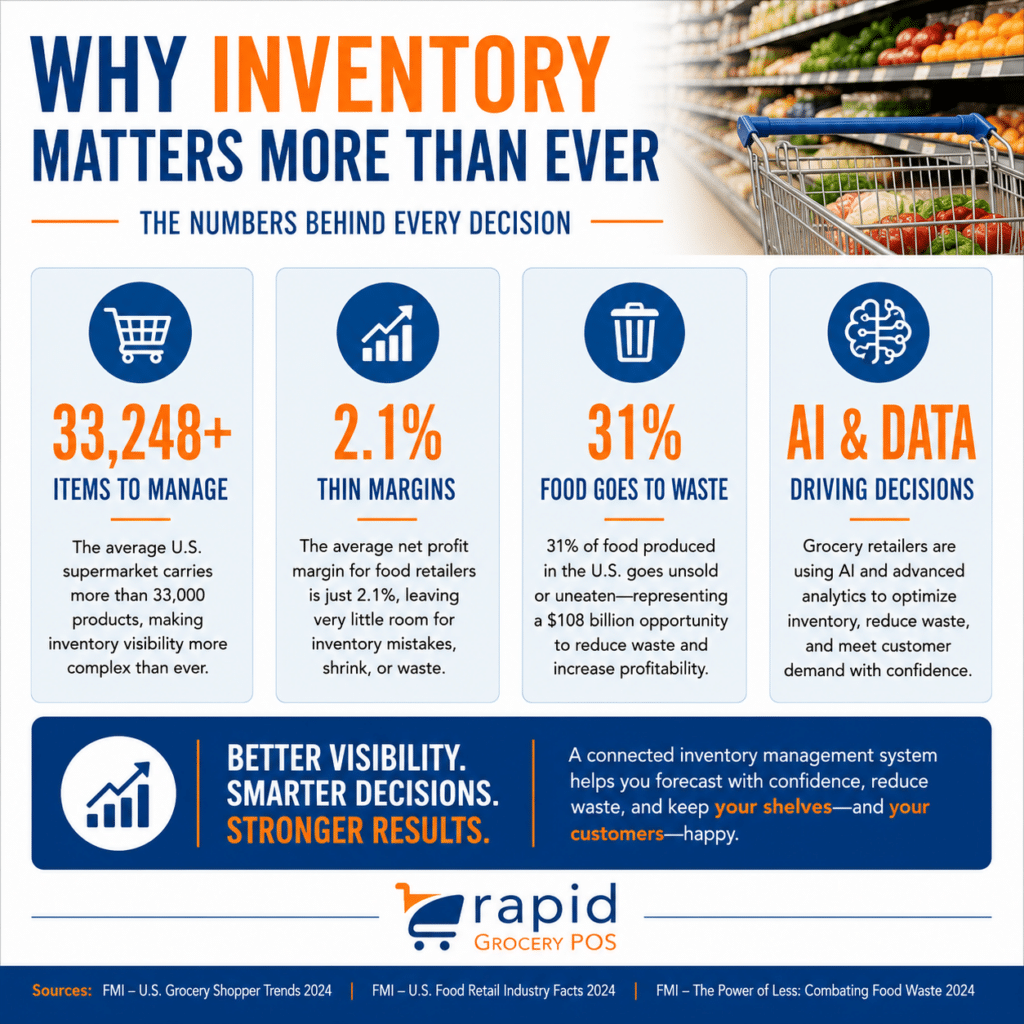
The average supermarket today carries over 33,000 stock-keeping units (SKUs) of inventory, according to the Food Industry Association (FMI). These thousands of items can quickly become a business owner’s best friend or worst enemy.
Some items sell every day. Others only move during holidays. Fresh produce changes with the seasons. Certain vendors experience delays. Consumer buying habits shift with the economy.
Manually tracking this data using spreadsheet software that can’t be integrated with other business management tools can be very challenging, especially with a large inventory. At its worst, it may pose a risk to your bottom line.
This information often lives in different programs: purchase contracts and ordered quantities in one, historical sales figures in another, invoices from vendors sent by email, and current stock figures noted down on paper by store staff.
Instead of managing your store, you’re spending time gathering the information you need to do your job.
Small Margins Leave Little Room for Error
The average supermarket has a net profit margin of approximately 2.1%. For every $100 in sales, the average supermarket realizes a net profit of $2.
Because margins are tight, it adds gravity to every inventory decision. Dead stock fills your shelves with items nobody wants, but ordering too little will send customers somewhere else. On top of that, user error in the form of pricing mistakes can further reduce margins and unnecessary markdowns chip away at profitability.
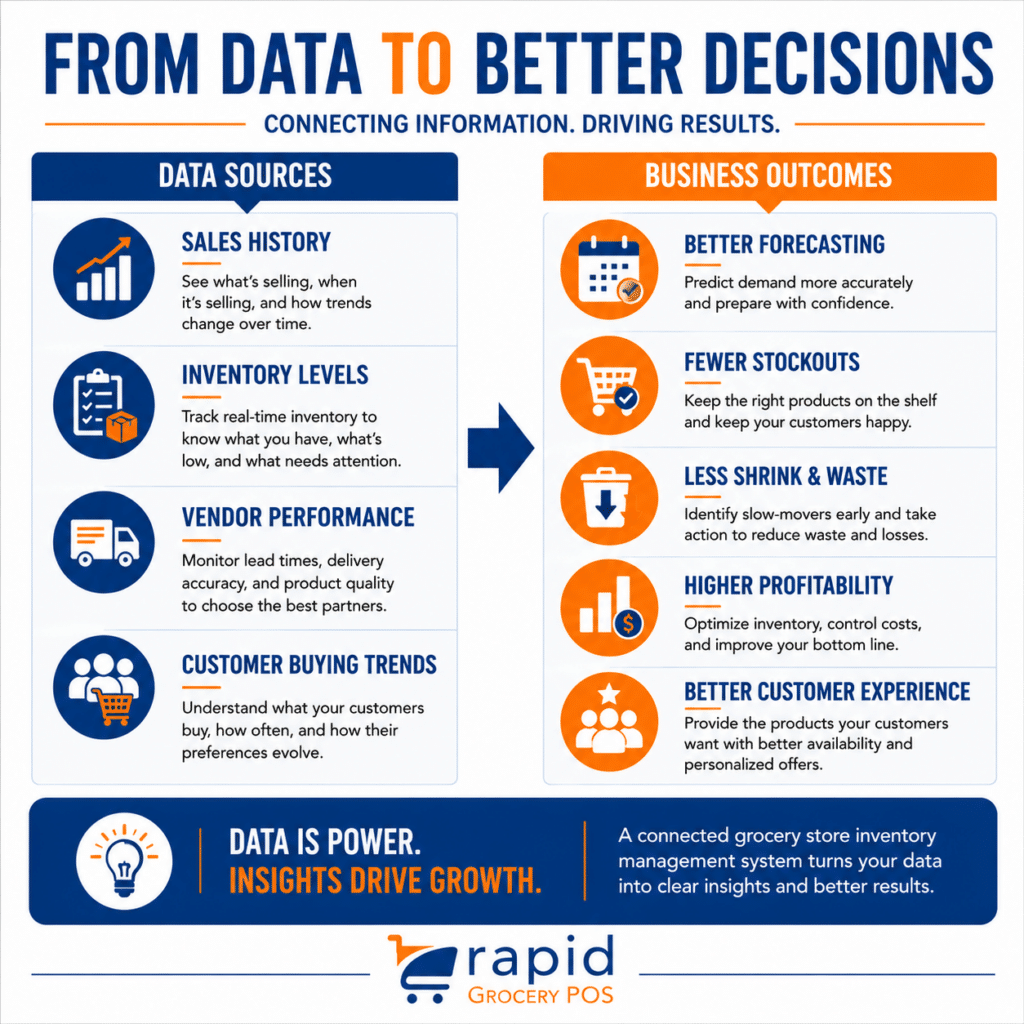
These problems stem from thousands of products being managed by manual means, and the problems inherent in that approach. Modern inventory management systems provide a great deal of visibility to enable better product-buying decisions.
Visibility Beats Guesswork
Experienced grocery managers have traditionally made key inventory decisions based on experience. They knew which products sold well before football season; they knew when barbecue supplies would spike and they remembered which holiday items needed larger orders. Even with better tools for managing inventory, that experience still matters. A good inventory management system supports a seasoned manager’s in-depth knowledge instead of trying to replace it.
Imagine preparing your next purchase order while being able to see last year’s sales for the same period, your current inventory on hand, see that some products are selling faster than expected, and being able to note the slow-moving items taking up shelf space – it’s a much different starting point than just relying on memory!
Inventory Isn’t Just About What’s on the Shelf
Inventory management is usually associated with counting products on the shelves, but that’s only the tip of the iceberg. It influences purchasing, cash flow, shrink, customer satisfaction, labor, and even marketing.
For example, using historical sales data for salsa, you’d know that it typically sells big in the summer, so you’d cross-merchandise salsa with chips, grilling supplies, and beverages that customers would also be buying that season. Dairy sales typically trend up prior to holidays, so with that knowledge you can adjust purchasing and staff accordingly. And if fresh bakery products are becoming waste before they can be sold, you know when to start running promotions for items at risk of spoilage.
Good inventory data doesn’t just tell you what happened. It helps you understand why, and what to do next.
Reducing Waste Without Sacrificing Availability
Waste is perhaps the greatest challenge facing grocery retail today. ReFED estimates that 31% of the food produced in the United States goes unsold or uneaten, with its value as potential lost sales estimated at $108 billion.
Not all waste in the supply chain is the retailer’s concern, but the retailer does have a role to play. Better inventory visibility means managers can recognize slow-moving items sooner, departments can adjust ordering quantities while stock that’s close to expiration can be used for promotions. Decisions in the fresh departments can be based on sales history rather than assumptions.
The goal isn’t simply to reduce waste. It’s to have the right products available for sale at the right time while minimizing losses of unsold product. That’s the difference between reactive and proactive inventory management.
Forecasting Is Becoming a Competitive Advantage
For many independent retailers, forecasting has meant referring to last year’s numbers and increasing them by a percentage to account for growth. That approach worked well when customer behavior stayed fairly consistent. Today, changes in consumer preferences happen at a different rate, and a more formalized approach to forecasting is needed.
Supplier delivery schedules have always had occasional delays, but we see them more frequently. Seasonal weather shifts and local events can cause huge swings in sales; some products spiking while others decline. The independent stores that switch to a more informed decision-making process will come out ahead. It isn’t the size of the store that matters, it’s the people making the decisions.
The grocery industry is moving toward smarter methods of inventory management, including artificial intelligence and advanced analytics, to keep inventory levels correct and eliminate unnecessary food waste. Most independent retailers don’t need the latest AI advances to see improvement; in most cases, simply putting the information they already have to better use is enough to bring about positive change.
That means looking at questions like: Does a supplier consistently arrive late? Are seasonal items selling earlier each year? Which categories generate the highest margins? Which products end up on markdown on a regular basis? Store owners and managers can become proactive instead of reactive by identifying trends and making decisions based on this information.
Inventory Should Support Every Department
Inventory isn’t the buyer’s responsibility alone – and it affects the whole store, too. The Produce needs timely receipt of fresh inventory to stay full without unnecessary shrink. The meat department needs time to sell fresh product before it expires. Center-store managers want visibility into fast-moving items before shelves go empty. Front-end employees need correct pricing and stock information for customers. Even your marketing departments benefits, too; there’s little value promoting an item that’s out of stock or running low.
Every department relies on the same inventory information; ensuring it’s accurate helps a store function more efficiently.
Bringing Your Systems Together
Most problems in a grocery store aren’t technology problems. They’re issues that happen because the technology doesn’t communicate with other parts of the store. One system manages sales. Another tracks accounting. Another handles ecommerce. Reports come from somewhere else. Inventory counts get updated manually, and the extra hours land on the retailer’s staff.
A modern inventory management system ties together the various components of a store’s business, automatically linking inventory, purchasing, customer, reporting, and sales data into one central place to view information and make decisions. A connected system reduces the work a manager has to do, increases the accuracy of counts, and gives the manager the insight they need to see how the store is actually performing.
Five Ways Connected Grocery Technology Makes a Difference
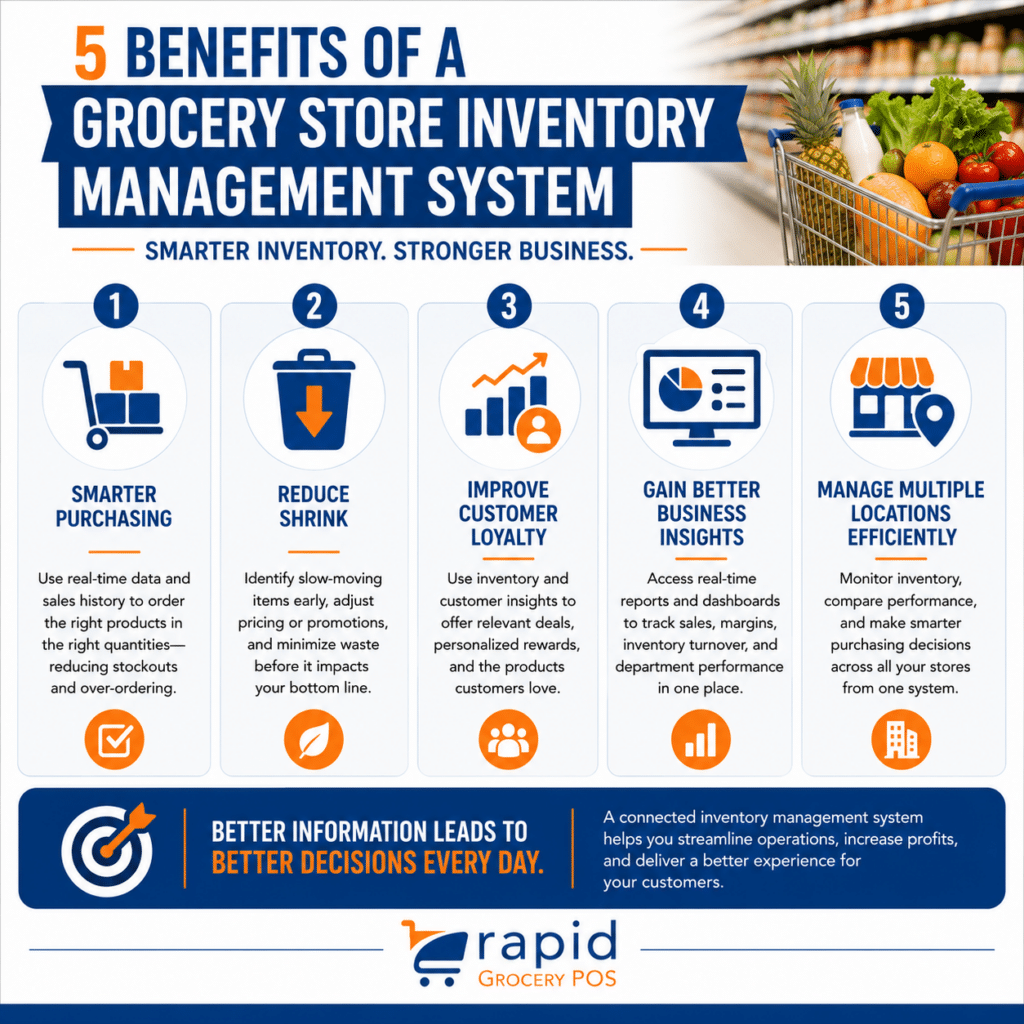
Technology at a grocery store should make running the store easier, not more complicated. Here are five ways a connected system helps:
- Make purchasing decisions with confidence. Use historical sales data, seasonality, and current stock levels to make more informed purchasing decisions and reduce overstocking.
- Reduce shrink before it happens. Identify slow-moving products before they become waste. Real-time inventory data lets managers adjust price, run a promotion, or change future buying habits before an item goes bad.
- Improve customer loyalty. Inventory and customer information can be your most valuable assets — and they’re even more powerful together. Being able to offer personalized promotions helps build loyalty and rewards customers.
- Gain better business insights. Running a simple report should never require you to export spreadsheets from multiple programs. Owners that have real-time visibility into their sales trends, department performance, vendors, inventory turnover, and profit can used the time they save to invest in other parts of the business.
- Manage multiple locations more efficiently. Up-to-date inventory information across store locations is essential. A connected multi-channel POS system lets managers see inventory, sales, vendors, turnover, and profitability across every location.
Independent grocery stores have historically done well because they know their customers better than anyone. The technology offered by Rapid Grocery POS doesn’t replace the personal connection you have with your customers. We aim to strengthen it.
If you’d like to see a personalized demo, you may schedule a time to meet with our sales team. We’d love to learn about your business and how we can help bridge the technology gap.